

The Lombards in Italy
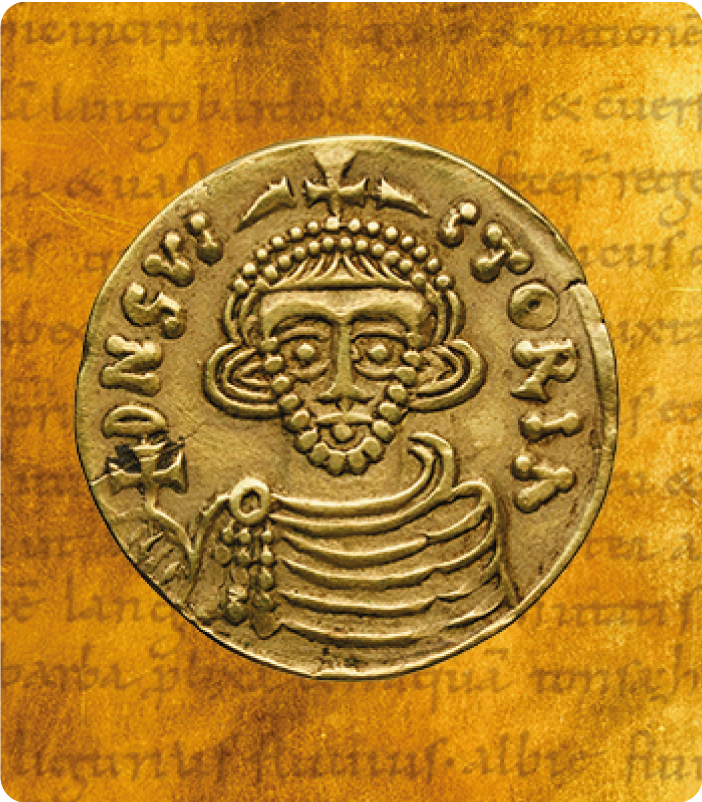
A people between Classicism and the Middle Ages
The people of the Lombards are one of the most important pieces in the history of Italy. Their cultural and artistic heritage, evidenced by extraordinary monuments and historical sites, is now part of the UNESCO World Heritage Site. Churches, monasteries, fortresses and shrines tell the story of a people who were able to blend their Germanic roots with Roman-Christian traditions, resulting in a unique cultural identity. The Lombards were not only a warrior people, but also a bridge between antiquity and the Middle Ages. Their culture, art and political organization left an indelible mark on the history of Italy and Europe. They helped to elaborate and spread the cultural, artistic, political and religious expressions that spread from Italian territory to Europe, anticipating the cultural renovatio attributed to the Carolingians.
A people on a journey
The homeland of the Winnili people, the ancient name for the Lombards, is traditionally traced to Scania, present-day Scandinavia. Over the centuries, they began a long migration southward, crossing Germany and Pannonia until they reached Italy in 568 A.D. under the leadership of King Alboin. Here they settled, establishing an independent kingdom.
The Lombard kingdom
Upon arrival in Italy, the Lombards organized themselves into duchies, ruled by powerful dukes. After a period of instability, King Autari (584-590) unified the kingdom, followed by the ruler Agilulf, who consolidated Lombard power. Under Liutprand (712-744), the kingdom reached its peak, expanding territories and strengthening Lombard culture.
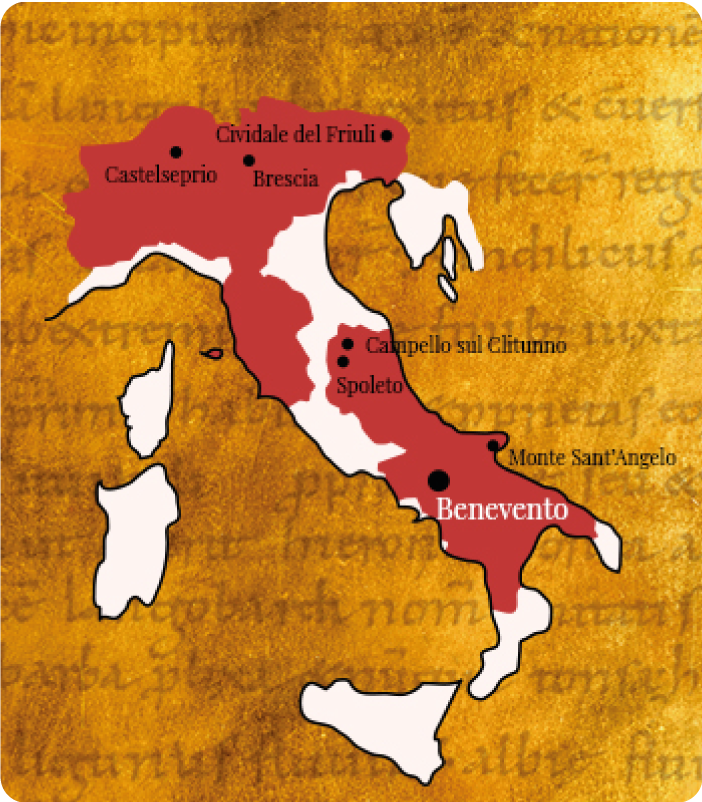
Lombard culture and art
Virtually devoid of architectural tradition and familiarity with stone building materials, in the Italian peninsula the Lombards acquired their own way of building that extended to all the duchies of the kingdom, with a uniformity of vision, but with different languages and purposes depending on the elites who commissioned their construction (kings, dukes or aristocrats). Lombard architecture reflects the meeting of different traditions. Monuments such as the Basilica of San Salvatore in Spoleto, the Tempietto del Clitunno, and the Church of Santa Sofia in Benevento demonstrate the Lombard ability to reinterpret classical and Byzantine elements in innovative ways. The Edict of Rotari (643 CE) was the first written collection of Lombard laws, marking a fundamental step in the legal organization of the kingdom.
The decline of the kingdom
In 774 AD, Charlemagne defeated King Desiderius, ending Lombard rule and integrating the kingdom into the Carolingian Empire. However, the Lombard legacy did not disappear: the Duchy of Benevento maintained its autonomy until the 11th century, and Lombard cultural influences continued to shape medieval European society