

The Geometries and Generating Lines of the Church of Santa Sofia
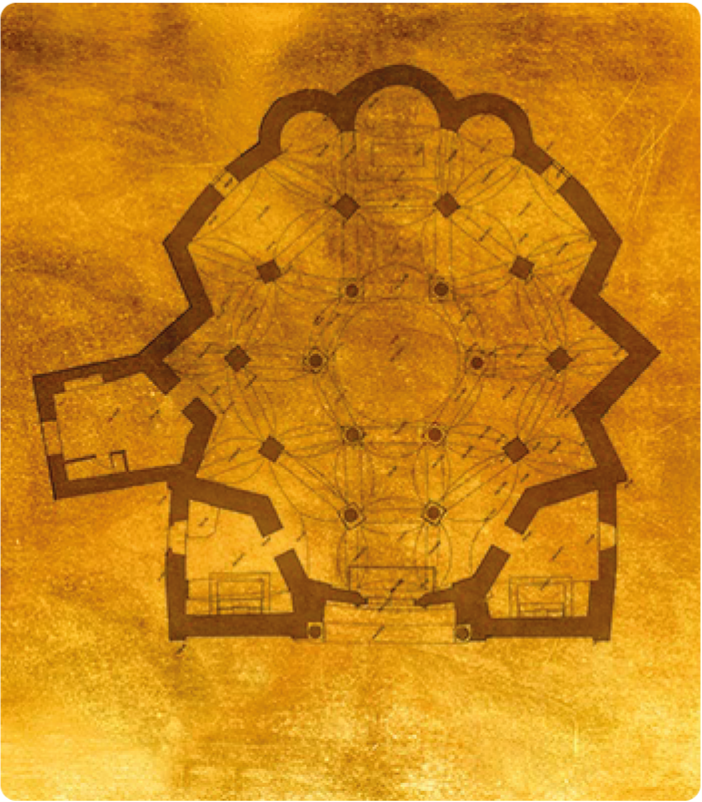
The Church of Santa Sofia in Benevento presents a complex spatial concept for its innovative use of geometries. The structure of the church reflects a dynamic interpretation of the central plan, combining elements of Byzantine, Roman-Hellenistic tradition and Lombard experimentation, creating an architectural layout of extraordinary originality.
An architecture outside the box
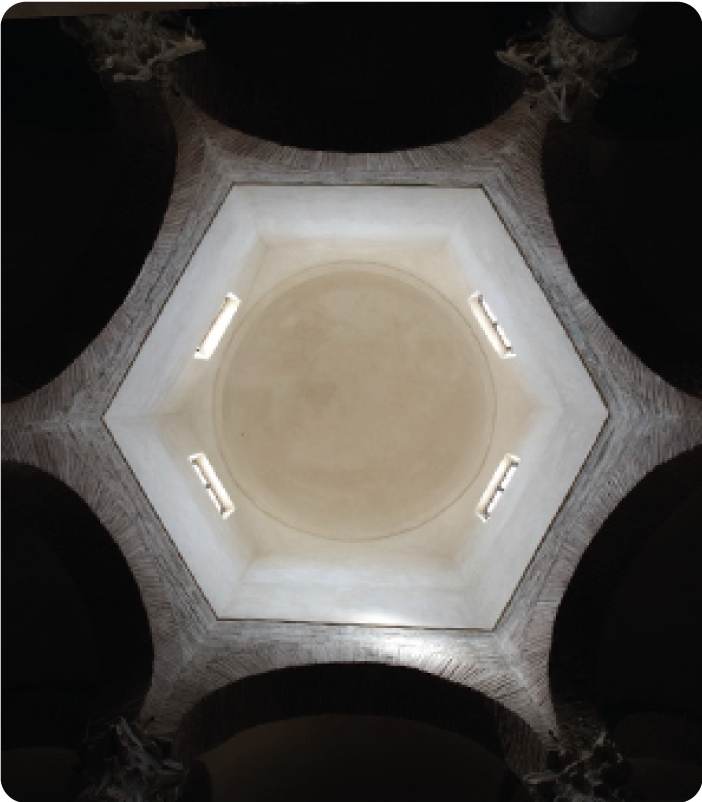
Unlike the more common Latin cross plan, Santa Sofia develops around a hexagonal central core, surrounded by a decagonal ring. This solution not only breaks the traditional symmetry of medieval churches, but also generates a changing visual and spatial effect, in which the perception of the environment changes depending on the point of observation.
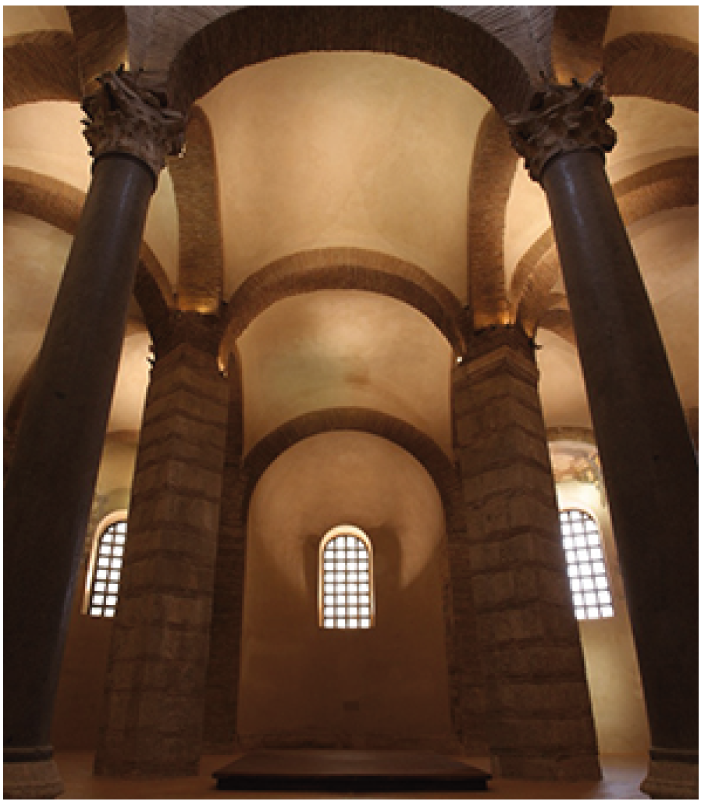
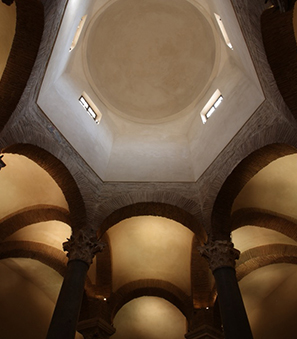
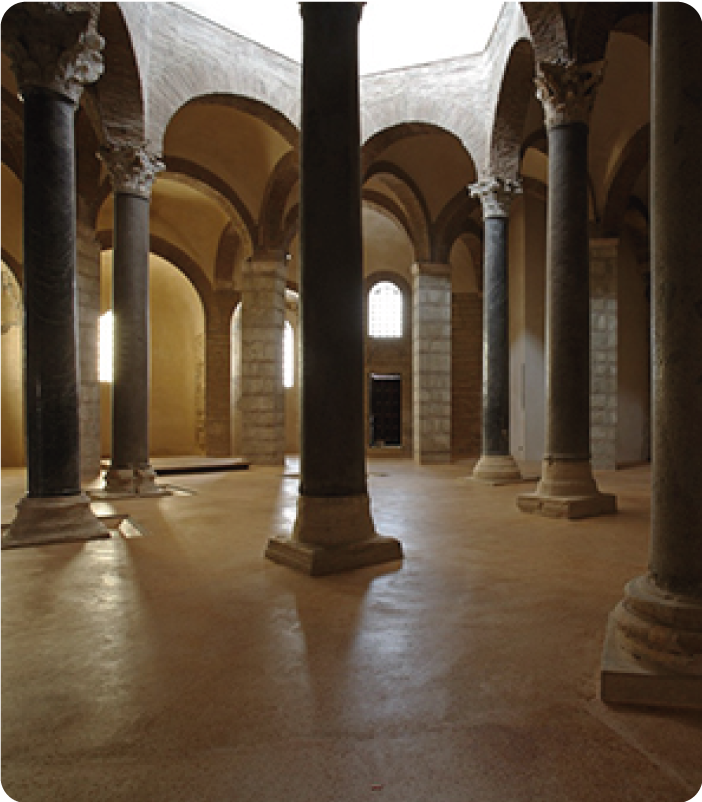
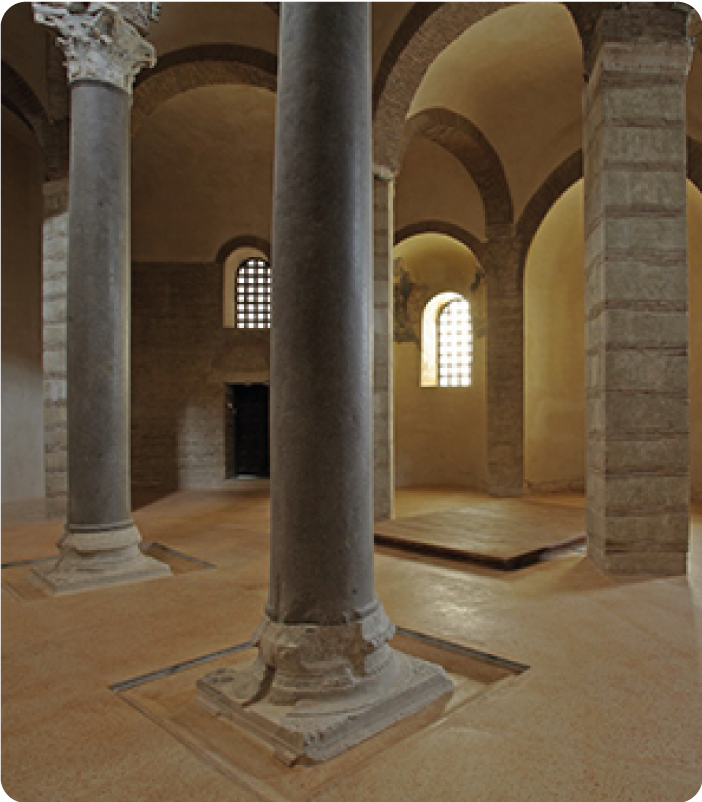
The central core is defined by six large bare columns, probably from the ancient Roman Temple of Isis. These columns supported the original dome, a key element that reinforced the structure’s sense of verticality.
Surrounding the hexagon is a decagonal ring, consisting of eight pillars and two columns positioned at the entrance. The perimeter of the church follows an alternation of circular and star shapes:
Circular in the presbytery area, where the shallow apses fit harmoniously into the architecture.
Stellar in the center, creating a dynamic effect that seems to amplify the space.
Circular again at the entrance, emphasizing the sense of continuity and welcome.
This arrangement of forms has led some scholars to speculate on a symbolic connection with Lombard culture, suggesting that the structure of the church may evoke the tents of the Lombard tribes, a reminder of their nomadic past and their long journey from northern Europe to southern Italy.
The balance between geometry and movement
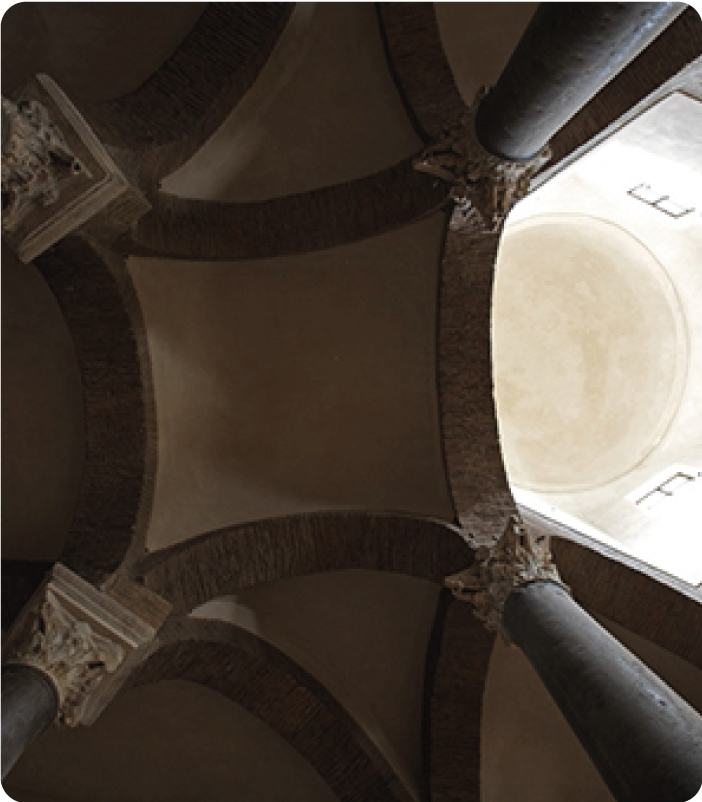
The interior architecture of Santa Sofia is designed to enhance the contrast between static and dynamic elements. The alternation of arches and vaults, the irregular arrangement of pillars, and the stellar geometry create a game of shifting perspectives and optical illusions.
The columns and pillars are not arranged uniformly, but oriented in a pattern parallel to the directional variations of the perimeter walls, emphasizing the effect of movement in space. This architectural choice allows the visitor’s gaze to be guided along privileged directional axes, creating an ever-changing perception of space.
A timeless architectural legacy
Despite Baroque transformations and modern restorations, the Church of Santa Sofia still retains its original geometric identity, making it a unique example of early medieval architectural experimentation. Its innovative layout, skillful use of geometric lines, and fusion of different cultures make it not only a masterpiece of Lombard architecture, but also a monument that continues to inspire wonder and study for its extraordinary spatial concept.